how to mop the floor so it gets dirty | illustration photo: Gemini AI
Brilio.net – Dirty floors in your house are not always obvious from first glance. Sometimes the signs are subtle — the color is starting to dull, it feels a little slippery when stepped on, or there is an unpleasant odor. So, if ants suddenly diligently parade on the floor of the house, that could also be a sign that the floor needs more attention than just sweeping.
Most people immediately mop with a mixture of water and regular mop soap. But for some people, this method feels less than optimal. That’s why various mopping tricks have appeared on social media, one of the popular ones is using hot water to make the floor cleaner.
But what if there was a method that was more practical, more economical, and the results were just as effective — it could even repel ants at the same time?
Simple Mopping Tricks
Netizens on the TikTok account @theremotereset shared a trick for mopping the floor which is quite attention-grabbing. No hot water, no expensive cleaning products — just one kitchen ingredient you almost certainly already have at home: vinegar.
Materials and Tools Required
Before starting, prepare the following things first. First, a clean bucket and mop complete with cloth. Second, enough clean water. Third, kitchen vinegar — white vinegar or regular cooking vinegar will do. Finally, a few drops of essential oil of choice such as lemon or peppermint, is optional but highly recommended.
Steps to Mop the Floor Using Vinegar
Step 1 — Make a paste solution
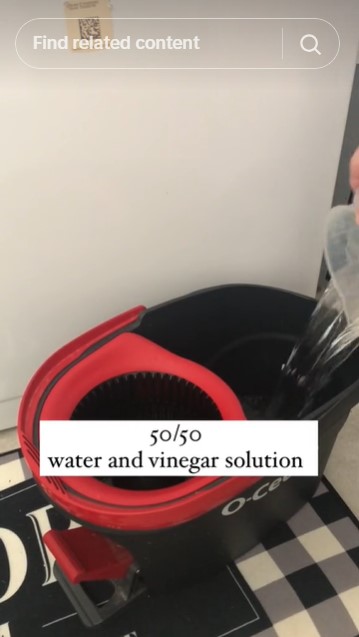
photo: TikTok/@theremotereset
Fill the bucket with clean water, then add the same amount of vinegar.
“(Use) 50/50 water and vinegar solution (Make a mixture of water and vinegar in a 50/50 ratio),” said the owner of the TikTok account @theremotereset, quoted BrilioFoodSunday (29/3/2026).
For a more concrete measure: if the bucket is filled with one liter of water, add one liter of vinegar. If the bucket you are using is bigger, just adjust it to the same ratio.
Step 2 — Add essential oil
Drop five to ten drops of essential oil into the solution. The owner of the @theremotereset account usually uses lemon or peppermint scents. These two aromas are known as quite effective natural ant repellents.
If you want another variation, tea tree essential oil could be an option because it has antibacterial properties which are good for the kitchen area. Lavender is suitable for use in the bedroom because the aroma is softer and calming. Meanwhile, eucalyptus provides a refreshing effect while also helping repel mosquitoes.
Step 3 — Mop the entire floor area
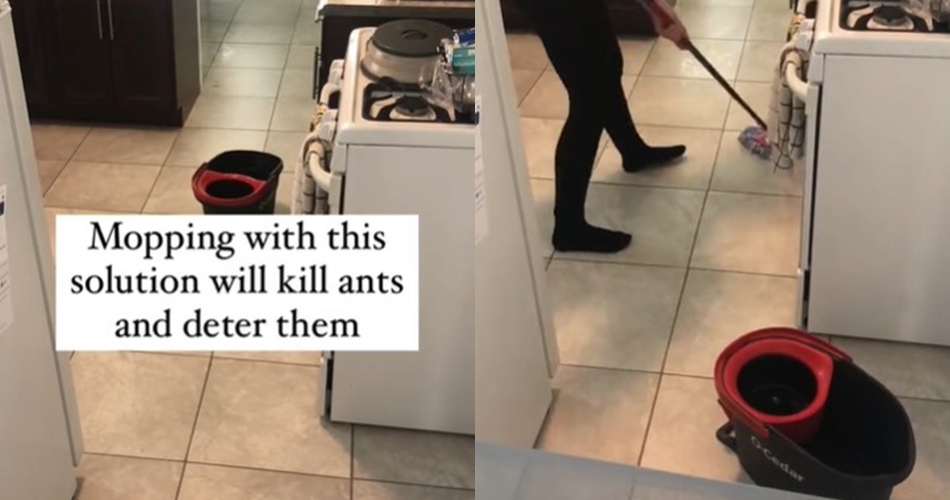
photo: TikTok/@theremotereset
Dip the mop into the solution, wring it out until it’s not too wet, then mop the entire floor area as usual. No need to rinse. Let the floor air dry and the vinegar smell will dissipate within 15 to 30 minutes.
Why can vinegar make floors rough and repel ants?
This trick is not just following a trend without any basis. There is a scientific explanation.
Vinegar contains acetic acid which works effectively to dissolve fat, soap residue and dirt stuck to the surface of the floor. That’s what makes the floor feel rough and not slippery after mopping. There is no layer of soap left, no dirt that remains thinly attached to the surface.
In addition, acetic acid also damages the pheromone pathways of ants. Ants communicate and find their way through the chemical trails they leave behind — once the trail is gone, the ants lose their way and don’t return to the same area. Plus the sharp smell of vinegar, the floor surface that has been mopped with this solution is indeed an uncomfortable place for ants.
Not all floors are suitable for mopping with vinegar
This is what is often missed in similar content, and it is important to know before putting it into practice straight away.
Vinegar is acidic. On some types of flooring, regular use can slowly damage the surface. Natural marble and granite floors should be avoided because the acid can gradually erode the stone layer. Terrazzo floors are also susceptible to acids. Likewise, wooden floors that are not coated with sealant — vinegar can penetrate and damage the wood grain.
On the other hand, vinegar solutions are safe and effective for use on ceramic floors, vinyl floors, porcelain floors, and cement or plaster floors. So first make sure of the type of floor in the house before starting.
How Often Should You Mop with This Solution?
For the kitchen and dining area, a frequency of two to three times a week is ideal because this area is most prone to food waste and crumbs which attract ants. For the living room and bedroom, once a week is enough.
If your house has a lot of ants, try doing this every day for the first one to two weeks. The goal is to completely break the pheromone path that has been formed, so that the ants have no more “road map” to return to.
Save the remaining solution for reuse
If there is still mop solution left after mopping, don’t throw it away immediately. Transfer to a spray bottle and store in a cool place out of direct sunlight.
The remaining solution can be used to spray the corners of the room where ants frequently pass, quickly clean stains on kitchen surfaces, or spray the area near the entrance as a layer to prevent ants from coming in from the outside. Practical, economical, and no need to buy any additional products.
Floor Mopping FAQ
1. Will the vinegar smell remain on the floor for a long time after mopping?
The smell of vinegar is quite strong during the mopping process, but this aroma disappears within 15 to 30 minutes after the floor is dry. Adding essential oils such as lemon or peppermint also really helps neutralize the odor more quickly.
2. What type of vinegar is best for mopping floors?
White vinegar is the best choice because it is colorless so it does not leave stains or marks on the floor surface. Apple cider vinegar can also be used, but you need to pay attention to the slightly yellowish color, especially on light colored or white floors.
3. Can this vinegar solution also kill germs on the floor?
Vinegar has mild antimicrobial properties that can help reduce the number of bacteria on floor surfaces. However, for stronger disinfection needs, for example when a family member is sick, it is best to still use a special disinfectant that is designed for that purpose.
4. If you don’t have essential oils, will vinegar be enough?
It’s enough. Vinegar alone is effective in cleaning floors and repelling ants. Essential oils only function as aroma enhancers and provide a slightly longer-lasting anti-ant effect. His presence is helpful, but not a primary requirement.
5. How long does the anti-ant effect last after mopping?
The effects can last several days, depending on how active traffic is in the house and how quickly the vinegar aroma evaporates. For best results, mop regularly and spray the remaining solution into certain corners as a “booster” between mopping schedules.
(brl/tin)
PakarPBN
A Private Blog Network (PBN) is a collection of websites that are controlled by a single individual or organization and used primarily to build backlinks to a “money site” in order to influence its ranking in search engines such as Google. The core idea behind a PBN is based on the importance of backlinks in Google’s ranking algorithm. Since Google views backlinks as signals of authority and trust, some website owners attempt to artificially create these signals through a controlled network of sites.
In a typical PBN setup, the owner acquires expired or aged domains that already have existing authority, backlinks, and history. These domains are rebuilt with new content and hosted separately, often using different IP addresses, hosting providers, themes, and ownership details to make them appear unrelated. Within the content published on these sites, links are strategically placed that point to the main website the owner wants to rank higher. By doing this, the owner attempts to pass link equity (also known as “link juice”) from the PBN sites to the target website.
The purpose of a PBN is to give the impression that the target website is naturally earning links from multiple independent sources. If done effectively, this can temporarily improve keyword rankings, increase organic visibility, and drive more traffic from search results.
Comments are closed, but trackbacks and pingbacks are open.