cleaning a burnt pan | illustration photo: Gemini AI
Brilio.net – Almost every cooking activity in the kitchen requires the help of a frying pan, whether for sautéing, frying or boiling. These appliances, especially the thick old-school frying pan types, are often a mainstay due to their incredible durability over the years. However, daily exposure to stove fire often leaves problems in the form of black burnt spots on the bottom or butt of the pan.
These crust stains are usually very difficult to remove if you only rely on ordinary dish washing soap. If you don’t currently have a supply of citric acid, which is usually used to remove acid stains, there is a simple trick from YouTube user Marst7 that only uses three ingredients from the kitchen.
3 Main Kitchen Ingredients and How They Work
The magic combination in question is baking soda, vinegar, and dish soap. These three ingredients work together effectively:
– Baking Soda: Acts as a mild abrasive that helps remove stains without roughly damaging the texture of the pan.
– Vinegar: Functions as a natural acid that replaces the role of citrus to soften stubborn burnt crust.
– Dishwashing Soap: Helps remove remaining dirt and grease that has been broken down by the previous mixture.
Steps to Clean the Butt of a Griddle
1. Turn the pan over and sprinkle baking soda evenly over the burnt area.
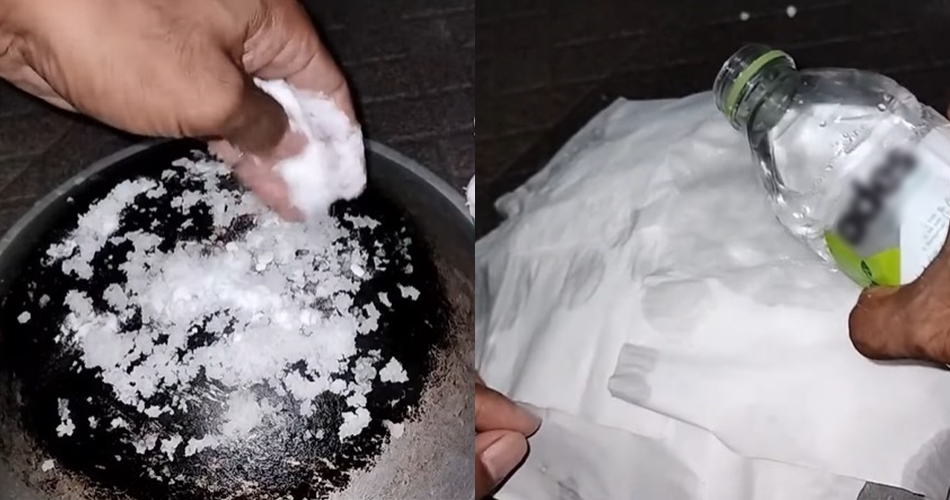
photo: YouTube/Marst7
2. Pour vinegar over the baking soda layer until a foamy reaction appears, then add dish soap.
3. Leave it for a few minutes so that the formula is absorbed and softens the stain.
4. Rub gently using a wire sponge or comb until the crust comes off, then rinse with clean water.
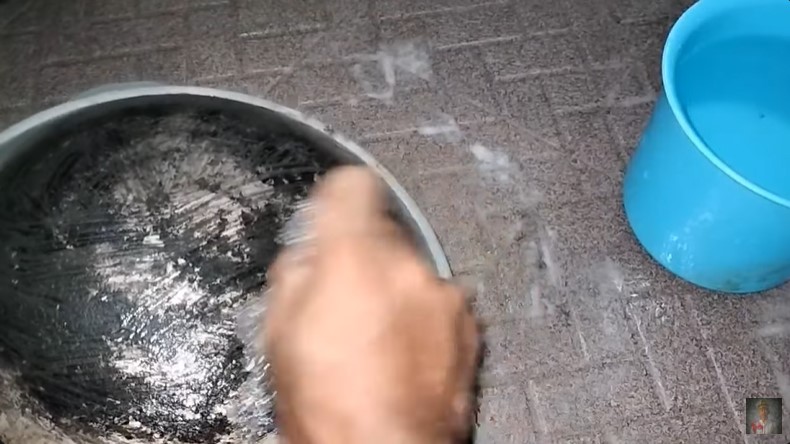
photo: YouTube/Marst7
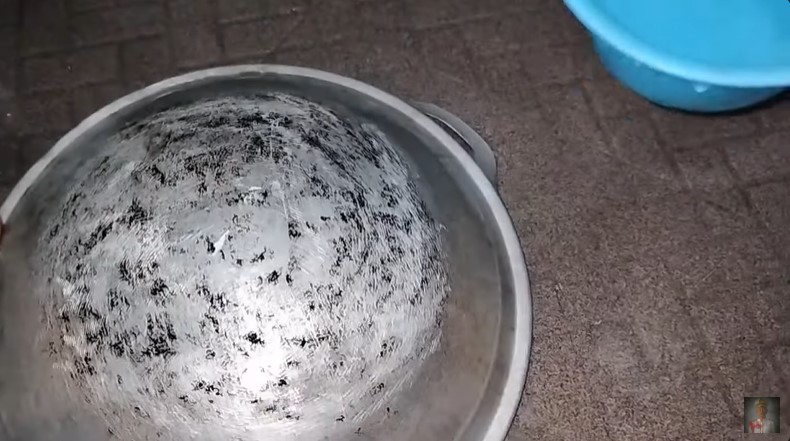
photo: YouTube/Marst7
Effectiveness Comparison: Citrus vs Kitchen Ingredients
For those who often ask which is superior, citrus is known to provide faster results for very old stains. However, the combination of baking soda and vinegar is much safer to use regularly. This method does not risk damaging the outer surface of the pan and is gentler on the non-stick coating of the pan than citric acid which is too concentrated.
Tips so that the bottom of the pan doesn’t burn easily
So that the workload is not too heavy in the future, it is a good idea to take the following preventive steps:
– Use Medium Heat: Fire that is too high to lick the outside of the pan will speed up the stirring process.
– Wipe Dry Before Cooking: Make sure the outside of the pan is completely dry before placing it on the stove so that the remaining water or oil doesn’t bake and become black stains.
– Regular Care: Deep clean the bottom of the pan at least once a week before the stains build up into permanent crust.
FAQ Cleaning a Burnt Pan
1. Is this method safe for aluminum pans?
Yes, this combination of kitchen ingredients is considered safe for various types of pan materials because its abrasive properties are quite soft.
2. How long is the ideal time to leave the spice mixture on the surface of the pan?
For maximum results, let it sit for 15-30 minutes depending on the thickness of the burnt spot.
3. Can toothpaste be used instead of baking soda?
Toothpaste can help because it contains abrasive ingredients, but its abrasive power is usually not as strong as baking soda for thick burnt crusts.
4. Why do burnt stains remain difficult to remove even after rubbing them?
This usually happens if the stain has penetrated too deeply or the air circulation when leaving the material is not long enough. Try repeating the vinegar soaking process more intensely.
5. Does hot water help this cleaning process?
Very helpful. Rinsing the pan with hot water after scrubbing can help remove any remaining grease and stains that are still attached.
(brl/tin)
PakarPBN
A Private Blog Network (PBN) is a collection of websites that are controlled by a single individual or organization and used primarily to build backlinks to a “money site” in order to influence its ranking in search engines such as Google. The core idea behind a PBN is based on the importance of backlinks in Google’s ranking algorithm. Since Google views backlinks as signals of authority and trust, some website owners attempt to artificially create these signals through a controlled network of sites.
In a typical PBN setup, the owner acquires expired or aged domains that already have existing authority, backlinks, and history. These domains are rebuilt with new content and hosted separately, often using different IP addresses, hosting providers, themes, and ownership details to make them appear unrelated. Within the content published on these sites, links are strategically placed that point to the main website the owner wants to rank higher. By doing this, the owner attempts to pass link equity (also known as “link juice”) from the PBN sites to the target website.
The purpose of a PBN is to give the impression that the target website is naturally earning links from multiple independent sources. If done effectively, this can temporarily improve keyword rankings, increase organic visibility, and drive more traffic from search results.
Comments are closed, but trackbacks and pingbacks are open.