how to clean an oily pan lid used in curry | illustration photo: Gemini AI
Brilio.net – Gulai has a high fat content from coconut milk and oily spices, and the hot steam that rises during the cooking process carries oil particles all over the surface of the pan lid.
The problem is, oil from coconut milk and animal fats has a different viscosity than regular cooking oil—it’s stickier, it settles more easily, and if you let it cool before washing it, the layer of oil can harden and actually stick to the surface.
The most common mistake is immediately dousing the pan lid with cold water after removing it from the still hot pan. Cold water meets a hot surface causing the still liquid oil to immediately “shock” and solidify more quickly before it can be removed.
How to clean them also cannot be generalized—pan lids made of glass, stainless steel, and aluminum have different surface characteristics and require slightly different treatment.
How to Clean Greasy Pot Lids Used by Goulash According to the Type
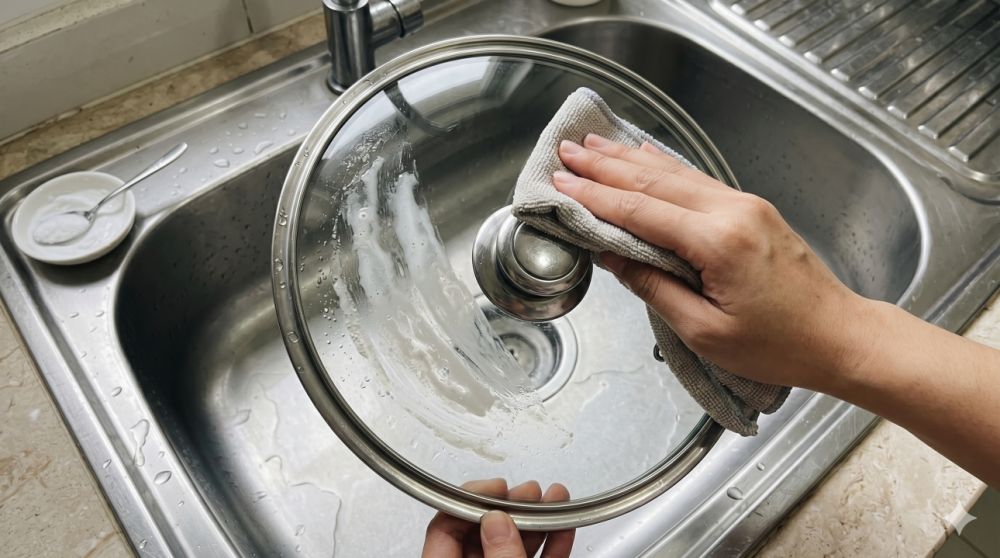
1. Cover the glass pan: Wipe off the oil before it comes into contact with water
How to clean an oily pan lid used in curry
© 2026 brilio.net/illustration Gemini AI
Glass pan lids have a smooth, non-porous surface, but the edges often have metal or plastic rings that trap grease and are the hardest to clean.
Gulai oil that dries on the surface of the glass will leave a whitish layer like soap marks—this is a combination of coconut milk residue and oxidized fat. Dousing it directly with cold water makes this layer stick even more due to the sudden temperature contraction.
Material:
– Kitchen tissue or dry cloth
– 1 tbsp baking soda
– 1 tablespoon liquid dishwashing soap
– Warm water (not hot, not cold)
– Soft sponge (not rough/wire scrubber)
Ladder:
1. As soon as cooking is finished, wipe the entire surface of the glass lid with a kitchen towel or dry cloth while the oil is still warm and liquid—this is the most important step that is often skipped.
2. Mix baking soda and dish soap until it becomes a paste, rub it all over the surface of the lid including the metal edge, let it sit for 5 minutes.
3. Rub gently with a soft sponge using circular movements, rinse with warm water (not cold water straight from the tap).
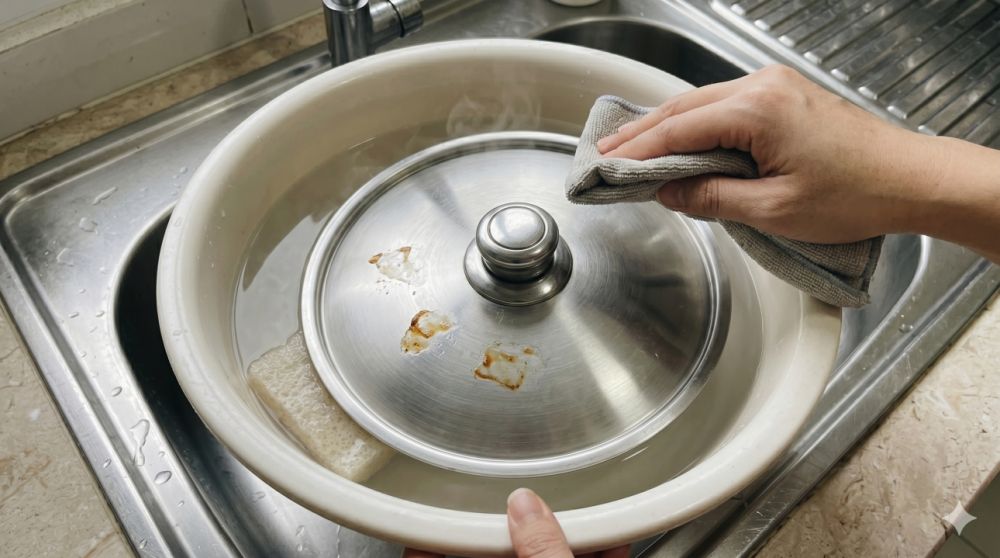
2. Stainless Steel Pot Lid: Use a Mixture of Vinegar and Warm Water
How to clean an oily pan lid used in curry
© 2026 brilio.net/illustration Gemini AI
Stainless steel has micro pores that are invisible to the eye, and curry oil that is allowed to cool there can form a thin film that is difficult to remove with just ordinary soap.
Stainless surfaces can also be easily scratched if scrubbed too hard with a rough scrubber, so the soaking method is more effective than force scrubbing.
White vinegar works well here because its acidic properties help break down layers of fat and dried coconut milk residue.
Material:
– 3 tbsp white vinegar
– 200 ml warm water
– Enough dish soap
– Microfiber cloth or soft sponge
Ladder:
1. Wipe the still liquid oil first with kitchen tissue, don’t soak or flush it straight away.
2. Mix white vinegar and warm water in a bowl, dip the pan lid and soak for 10–15 minutes so that the hardened oil layer begins to soften.
3. Add a little dish soap, rub with a microfiber cloth or soft sponge, rinse thoroughly with warm water.
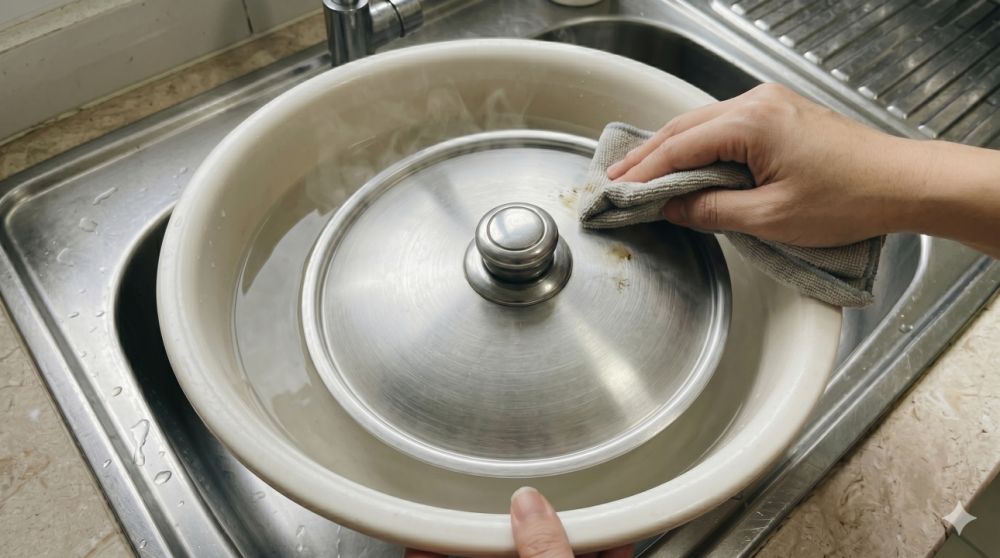
3. Aluminum Pot Cover: Avoid Vinegar and Baking Soda, Use Hot Water Only
How to clean an oily pan lid used in curry
© 2026 brilio.net/illustration Gemini AI
Aluminum is a chemically reactive material—vinegar, baking soda, and strong acids or bases can cause the aluminum surface to become dull, streaked, or even slightly corroded with regular use.
The safest way to use oily aluminum lids from confectionery is to use hot water and mild dish soap, not a mixture of other kitchen ingredients.
The main key remains the same: wipe off the oil before it comes into contact with water so it doesn’t harden immediately.
Material:
– Kitchen tissue or dry cloth
– Hot water (not boiling, around 70–80°C)
– Liquid dishwashing soap (choose a gentle formula)
– Ordinary sponge
Ladder:
1. Wipe the entire surface of the lid with a kitchen towel while it is still warm to remove as much oil as possible before it hardens.
2. Pour hot water over the pan lid or soak briefly in a bowl of hot water for 5–7 minutes.
3. Apply dish soap, scrub with a regular sponge (not a wire scrubber), rinse with warm water—dry immediately to avoid water spots.
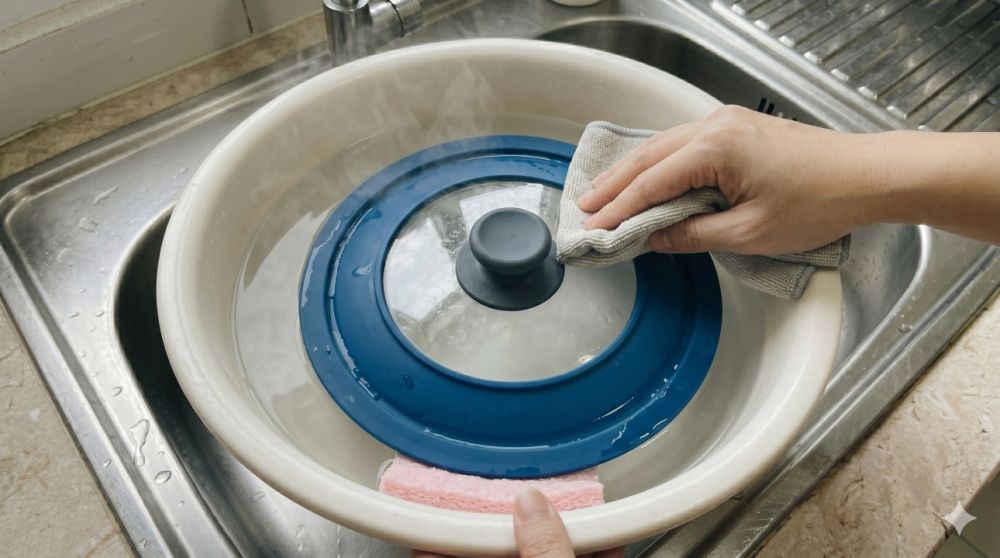
4. Plastic or Silicone Pot Covers: Soak in Hot Soapy Water, Do Not Scrub Vigorously
How to clean an oily pan lid used in curry
© 2026 brilio.net/illustration Gemini AI
Plastic or silicone lids are often used on regular pans or multi-purpose pans, and their surfaces have the property of absorbing odors and oil more deeply than metal or glass.
Rubbing too hard can leave fine scratches which become places for oil and bacteria to hide that are more difficult to clean in the future.
Longer soaking in hot, soapy water is the most effective and safest method for this material.
Material:
– Kitchen tissue for the initial wipe
– Enough hot water to soak
– 1 tablespoon dishwashing soap
– 1 tbsp baking soda (optional, for lingering odor)
– Soft sponge
Ladder:
1. Wipe the still warm oil with kitchen tissue, do this as soon as possible before the oil hardens between the edges or handle of the lid.
2. Soak the plastic or silicone lid in a basin filled with hot water and dish soap for 15–20 minutes—add baking soda if there is a lingering spice smell.
3. Rub with a soft sponge, rinse thoroughly with warm water, and dry with a cloth—don’t dry it directly in hot sunlight because it can cause the plastic to expand and change shape.
General Questions
1. Can I wash glass pot lids in the dishwasher?
Most glass pan lids are dishwasher safe, but you need to check the product label first. What you need to pay attention to is the metal and plastic rings or handles—some types of adhesives or seals between the glass and the metal frame can weaken if they are frequently exposed to high heat from the dishwasher. For lids used for cooking curry, it is safer to wash them manually first to remove the thick layer of oil before entering the dishwasher.
2. Why do stainless steel pot lids still look dull even though they have been washed thoroughly?
Dullness on stainless steel is usually not dirt residue, but water spots—mineral stains from tap water that stick to it after drying. How to fix this: after washing, wipe immediately with a dry cloth or microfiber, don’t let it dry alone. To restore shine, rub with a little olive oil or mineral oil using a soft cloth in the direction of the stainless grain.
3. How long is it safe to leave curry oil on the lid of the pan before cleaning?
Ideally, the pan lid should be cleaned no more than 30-60 minutes after use, while the oil is still liquid or semi-liquid and easier to remove. If left for more than a few hours, especially at room temperature that is not too hot, the fat from the coconut milk and stock can harden and require extra effort to clean. The longer you leave it, the harder the coating becomes—especially in cool climates or in air-conditioned rooms.
4. Is it safe to use a wire scrubber to cover used curry pans?
For glass, stainless steel, plastic and silicone, wire scrubbers are not recommended because they leave scratches which actually expand the area where dirt and oil can stick in the future. Wire scrubbers are only relatively safe for cast iron lids, which have a rougher surface and require abrasives to clean. For other materials, a soft sponge or microfiber cloth will suffice when combined with a proper soaking method.
5. Does the lid of a pan that has often been exposed to curry oil need to be specially deep cleaned occasionally?
Yes, especially for plastic, silicone and stainless steel lids that have been used for years. A layer of oxidized oil can accumulate between the edges and handles even if washed regularly. A simple deep clean can be done by soaking the entire lid in a solution of hot water, a little dish soap, and a tablespoon of baking soda for a full 30 minutes, then scrubbing the corners with an old toothbrush. Do this once a month for lids that are often used to cook coconut milk.
(brl/tin)
PakarPBN
A Private Blog Network (PBN) is a collection of websites that are controlled by a single individual or organization and used primarily to build backlinks to a “money site” in order to influence its ranking in search engines such as Google. The core idea behind a PBN is based on the importance of backlinks in Google’s ranking algorithm. Since Google views backlinks as signals of authority and trust, some website owners attempt to artificially create these signals through a controlled network of sites.
In a typical PBN setup, the owner acquires expired or aged domains that already have existing authority, backlinks, and history. These domains are rebuilt with new content and hosted separately, often using different IP addresses, hosting providers, themes, and ownership details to make them appear unrelated. Within the content published on these sites, links are strategically placed that point to the main website the owner wants to rank higher. By doing this, the owner attempts to pass link equity (also known as “link juice”) from the PBN sites to the target website.
The purpose of a PBN is to give the impression that the target website is naturally earning links from multiple independent sources. If done effectively, this can temporarily improve keyword rankings, increase organic visibility, and drive more traffic from search results.
Comments are closed, but trackbacks and pingbacks are open.