how to store cabbage without a refrigerator | illustration photo: Gemini AI
Brilio.net – Cabbage or kale is one of the mainstay vegetables in our kitchen because of its versatility. Starting from being used as crispy fresh vegetables, stir-fried mixtures, dumplings, to snacks like okonomiyaki, this vegetable always manages to complement our daily dishes. Because it is often used for various menus, buying cabbage in large quantities as stock at home has become a common habit for us.
However, the biggest challenge arises when we have to keep it fresh without the help of a refrigerator. If simply left at room temperature, the cabbage will quickly wilt, become slimy, and its surface can even turn black and rot. Luckily, we can use a simple trick to keep cabbage crisp and fresh for days without needing space in the refrigerator.
Accuracy Analysis: Why Can Water Keep Cabbage Fresh?
Scientifically, cabbage has a cell structure that requires constant hydration to keep its leaves stiff and crunchy. When cabbage is picked, the water supply is cut off, so the cells begin to lose turgor pressure causing them to wilt.
Soaking the head or base of the cabbage in water works like a mini hydroponic system. The cabbage weevil acts as a natural channel that absorbs water into the upper leaves, maintains cell moisture, and prevents the oxidation process that triggers black color or slime due to putrefactive bacteria.
Comparison of Cabbage Storage Methods
| Storage Method | Estimated Durability | Effects on Cabbage | Vital Records |
|---|---|---|---|
| 🥬 Leave it at open room temperature | 1–2 Days | Cabbage wilts quickly, becomes slimy, and its surface begins to blacken, causing its quality to decrease. | It is not recommended if you want to store cabbage stock for several days. |
| ❄️ Refrigerator (Chiller + Container/Plastic Wrap) | 1–2 Weeks | Cabbage stays fresh, green, and crispy for longer because it loses water more slowly. | Requires space in the refrigerator and a closed container or plastic wrap to maintain humidity. |
| 💧 Soaked in Water (Hack Hump) | 5–7 Days | The leaves remain stiff, fresh, and the tubers can grow new roots so that their freshness is better maintained. | The soaking water must be changed periodically so that it does not become a place for bacteria to grow. |
Tricks for Storing Fresh Cabbage Without a Refrigerator
This storage trick was adapted from a practical method shared by the YouTube channel Dzakiyya encle as quoted by BrilioFood. This natural method is very pocket friendly because we only need a supply of clean water to keep the vegetables fresh. The key to the success of this method lies in selecting good quality cabbage from the first time it is purchased from the market.
Material:
– Freshly purchased cabbage
– Sufficient clean water
– Medium sized bowl or container
Ladder:
1. Sort the cabbage first by removing the outer leaves that are blackened or damaged so that the rot does not spread to the inside.
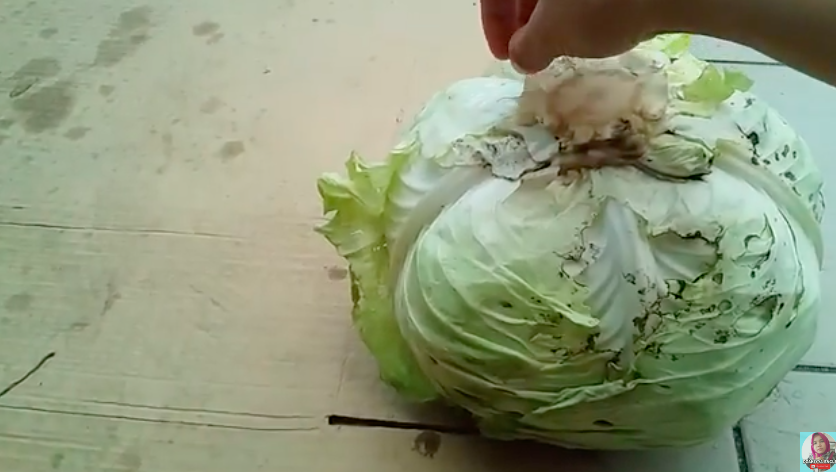
photo: YouTube/Dzakiyya encle
2. Prepare a bowl or container, then pour enough clean water into the container.
3. Place the cabbage on a bowl with the head facing down, and make sure the head of the cabbage is completely submerged in the water.
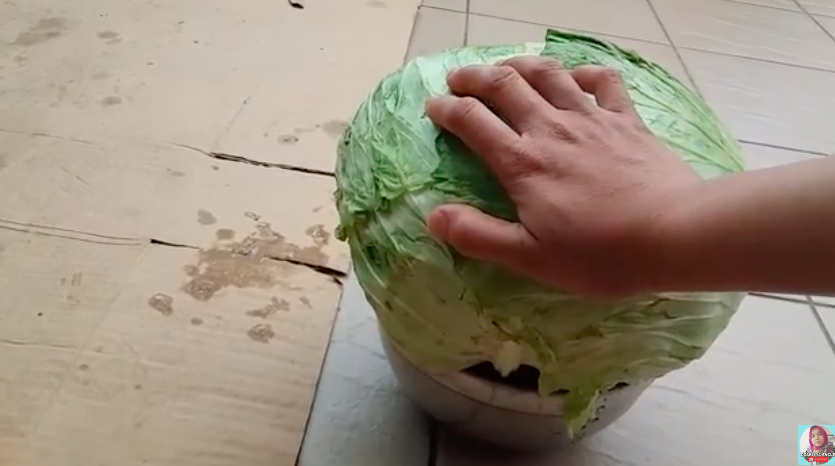
photo: YouTube/Dzakiyya encle
The key to the success of this method is revealed directly by the trick maker.
“So later the roots will come out of the tuber, so the cabbage will look like it is alive again,” he said.
4. Change the soaking water in the bowl regularly every two days to prevent the growth of bacteria or mosquito larvae.
5. When you want to cook, just chop the cabbage as necessary and leave the rest of the cabbage submerged in a bowl of water.
Frequently Asked Questions (FAQ)
1. Should the water used be boiled water or ordinary tap water?
You can use clean, regular tap water. The most important thing is that the water does not contain concentrated chemicals such as high levels of chlorine which can actually damage plant cell tissue.
2. Can this trick be applied to cabbage that has been cut into two parts?
This method is most effective for cabbage that is still intact and round. If the cabbage has been split, the inside of the cabbage will be directly exposed to excessive air and water, which actually speeds up the rotting process.
3. Why does the cabbage soaking water have to be changed every two days?
Water that is left out for too long will become an ideal breeding ground for putrefactive bacteria and mosquito larvae. Changing the water regularly maintains a good supply of dissolved oxygen for the cabbage heads.
4. Can purple cabbage also be stored using this method of soaking the heads?
Can. Purple cabbage has a characteristic tuber structure that is similar to green cabbage, so this mini hydroponic water absorption mechanism still works well.
5. What are the signs that the cabbage is no longer suitable for consumption even if you use this trick?
If the cabbage leaves feel very soft when pressed, give off a strong sour aroma, or the heads start to rot and fall apart, that’s a sign that the cabbage needs to be thrown away.
(brl/tin)
PakarPBN
A Private Blog Network (PBN) is a collection of websites that are controlled by a single individual or organization and used primarily to build backlinks to a “money site” in order to influence its ranking in search engines such as Google. The core idea behind a PBN is based on the importance of backlinks in Google’s ranking algorithm. Since Google views backlinks as signals of authority and trust, some website owners attempt to artificially create these signals through a controlled network of sites.
In a typical PBN setup, the owner acquires expired or aged domains that already have existing authority, backlinks, and history. These domains are rebuilt with new content and hosted separately, often using different IP addresses, hosting providers, themes, and ownership details to make them appear unrelated. Within the content published on these sites, links are strategically placed that point to the main website the owner wants to rank higher. By doing this, the owner attempts to pass link equity (also known as “link juice”) from the PBN sites to the target website.
The purpose of a PBN is to give the impression that the target website is naturally earning links from multiple independent sources. If done effectively, this can temporarily improve keyword rankings, increase organic visibility, and drive more traffic from search results.
Comments are closed, but trackbacks and pingbacks are open.