how to process noodles so they don’t stick | illustration photo: Gemini AI
Brilio.net – Cooking noodles looks simple, but in reality many people still experience the end result being soggy and sticking together. In fact, the chewy and neatly separated texture of the noodles can make the appearance of the dish more appetizing. The key is in the right processing technique, not just plain boiling.
Quoted BrilioFood from the Facebook account @Septy Anggraini, one method that is starting to be widely used is the steaming technique, which makes the noodles cook evenly without absorbing too much water. With this method, the noodles don’t fall apart easily and still have the right texture when re-cooked with spices or other ingredients.
Plus, with a touch of oil after the steaming process, the noodles will be easier to process and won’t stick together. This method is really suitable for those of you who want your cooking results to look more professional, both for personal consumption and sales.
Steps to Processing Non-Stick Noodles
1. Prepare the noodles (egg noodles or wet noodles according to taste), then break them down first so they don’t clump.
2. Heat the steamer until the water boils and there is a lot of steam.
3. Put the noodles in the steamer, spread evenly, then steam for 5-7 minutes until half cooked.

photo: Facebook/@Septy Anggraini
4. Pour a little cooking oil to taste onto the noodles.
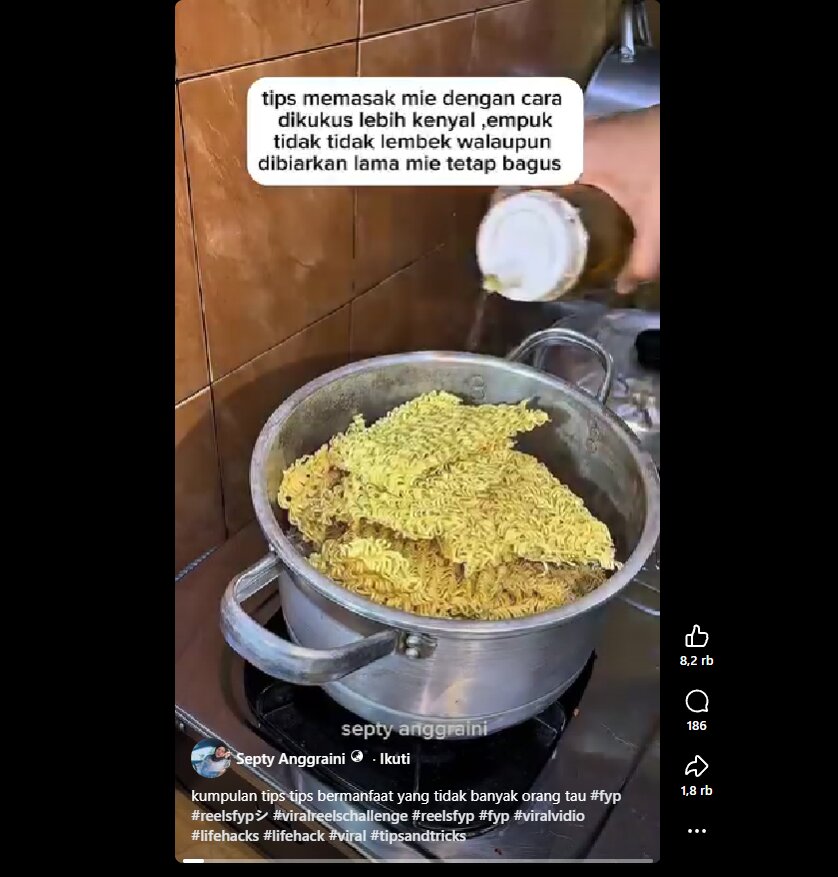
photo: Facebook/@Septy Anggraini
5. Remove the noodles from the steamer, then immediately transfer them to a container.
6. Let stand for a while until the noodles are not too hot and ready to be prepared according to the recipe.
Tips for Processing Non-Stick Noodles
– Use medium heat when steaming so that the noodles are not too damp.
– Don’t steam for too long so the noodles don’t get too cooked.
– Choose oil with a neutral taste so that it doesn’t interfere with the taste of the dish.
– Stir the noodles while they are still warm so that the oil spreads more easily.
– If not using immediately, store the noodles in a closed container so they don’t dry out.
Noodle Processing FAQ
1. Can all types of noodles be steamed?
Almost all types of noodles can be steamed, especially egg noodles and wet noodles. However, for instant noodles, simply boil them as usual because the texture is thinner.
2. Why do noodles become sticky after cooking?
Usually because there is too much water when boiling or not adding oil after cooking, the starch in the noodles makes them stick together.
3. Can the cooking oil be replaced with other oil?
Yes, you can use sesame oil or olive oil, but use just a little so the aroma isn’t too strong.
4. How long can noodles be stored after steaming?
Noodles can be stored in the refrigerator for 1-2 days in a tightly closed container. Make sure it’s not damp so it doesn’t go stale quickly.
5. Do noodles need to be washed after steaming?
No need, because the steaming process doesn’t leave as much starch as when boiling.
Author: Anggita Cahya Rosdiana
Bio: Alumni of Communication Science, Muhammadiyah University of Magelang, who has experience in writing published scientific articles, as well as actively writing personal blog articles. Several articles raise the topic of coffee, such as robusta and arabica, as part of an exploration of interest. Currently, he is interested in developing writing on culinary and lifestyle topics, and has an interest in the field of digital communication.
(brl/tin)
PakarPBN
A Private Blog Network (PBN) is a collection of websites that are controlled by a single individual or organization and used primarily to build backlinks to a “money site” in order to influence its ranking in search engines such as Google. The core idea behind a PBN is based on the importance of backlinks in Google’s ranking algorithm. Since Google views backlinks as signals of authority and trust, some website owners attempt to artificially create these signals through a controlled network of sites.
In a typical PBN setup, the owner acquires expired or aged domains that already have existing authority, backlinks, and history. These domains are rebuilt with new content and hosted separately, often using different IP addresses, hosting providers, themes, and ownership details to make them appear unrelated. Within the content published on these sites, links are strategically placed that point to the main website the owner wants to rank higher. By doing this, the owner attempts to pass link equity (also known as “link juice”) from the PBN sites to the target website.
The purpose of a PBN is to give the impression that the target website is naturally earning links from multiple independent sources. If done effectively, this can temporarily improve keyword rankings, increase organic visibility, and drive more traffic from search results.
Comments are closed, but trackbacks and pingbacks are open.